Poker Equity MLOps Pipeline
End-to-end MLOps system: schedule training, register models, serve predictions, and monitor drift with Prometheus, Grafana, and Alertmanager. Built to showcase productionization skills, not model research.
More About the Project
Python | PySpark | Airflow | MLflow | FastAPI | Docker | Kubernetes | Prometheus | Grafana | Pytest | GitHub Actions
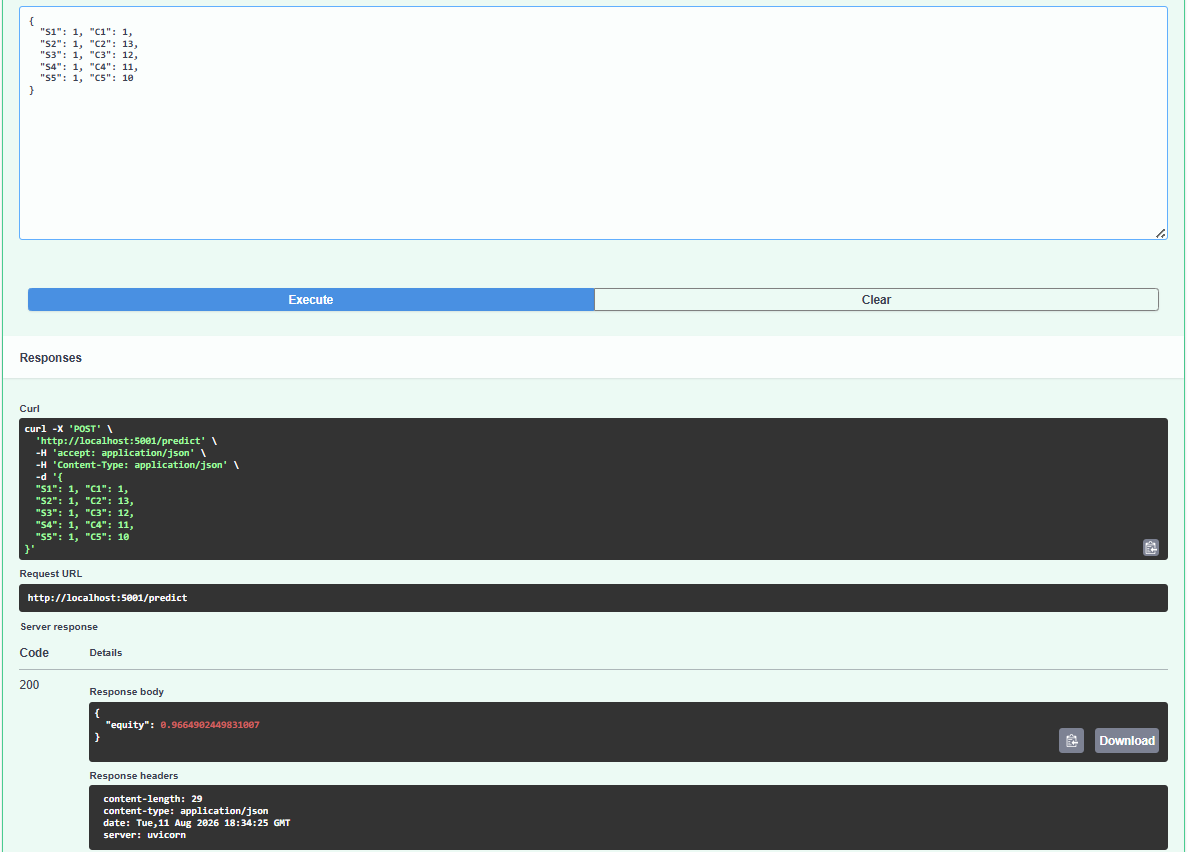
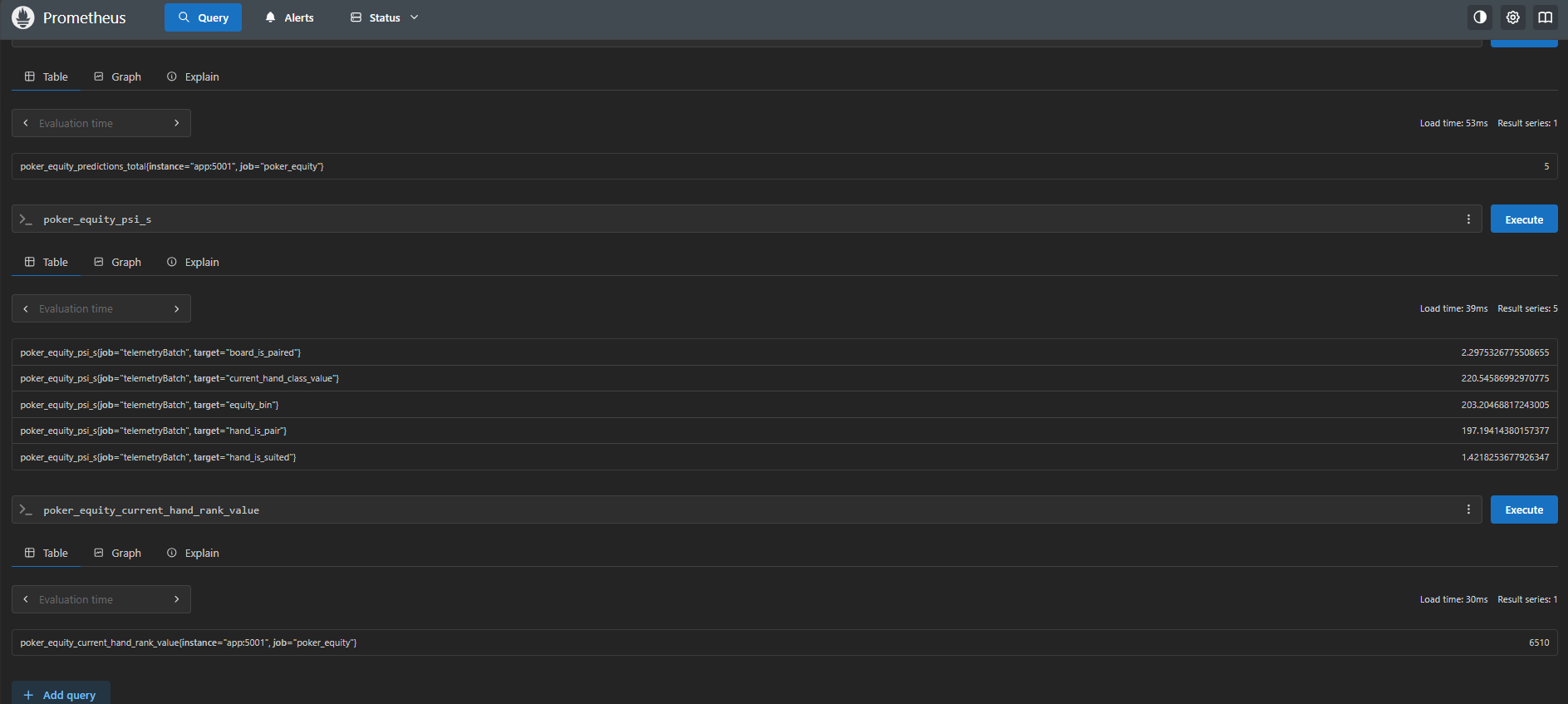
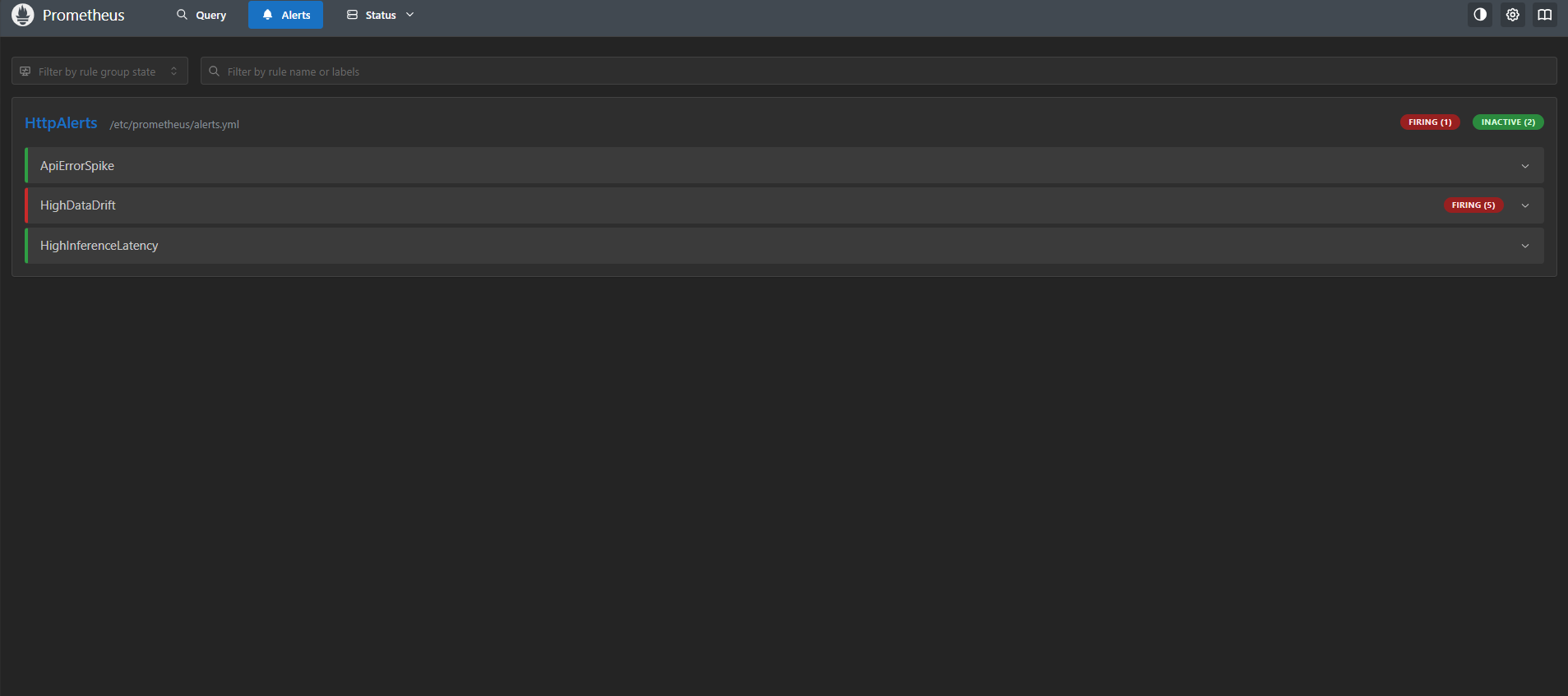
This project is an MLOps portfolio piece. The domain is a poker win-equity regressor, but that is only used to showcase the MLOps system. I built it to show I can take a model from training into a monitored service, which is what many ML Engineers and Applied AI roles ask for beyond notebook work. My MSc already covers modeling. Here the focus is the production path: train, package, schedule, serve, observe. The stack runs locally with Docker Compose. Training is orchestrated in Airflow and logged to MLflow. A FastAPI service loads the latest model and exposes /predict plus /metrics. Prometheus scrapes API metrics, a drift job pushes PSI scores through Pushgateway, Alertmanager receives alert rules, and Grafana shows the dashboard. There is also a minimal Kubernetes Deployment and Service for the API, plus GitHub Actions CI for unit tests and image builds.
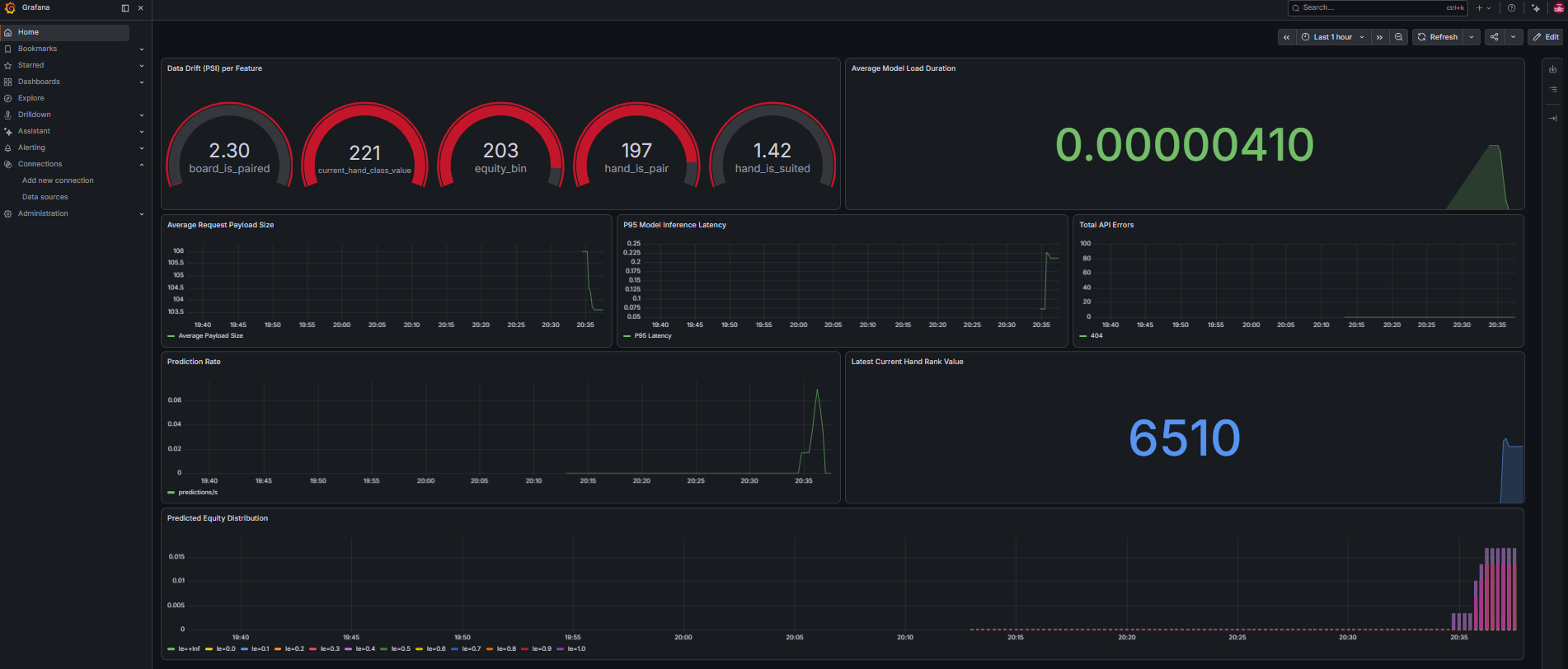
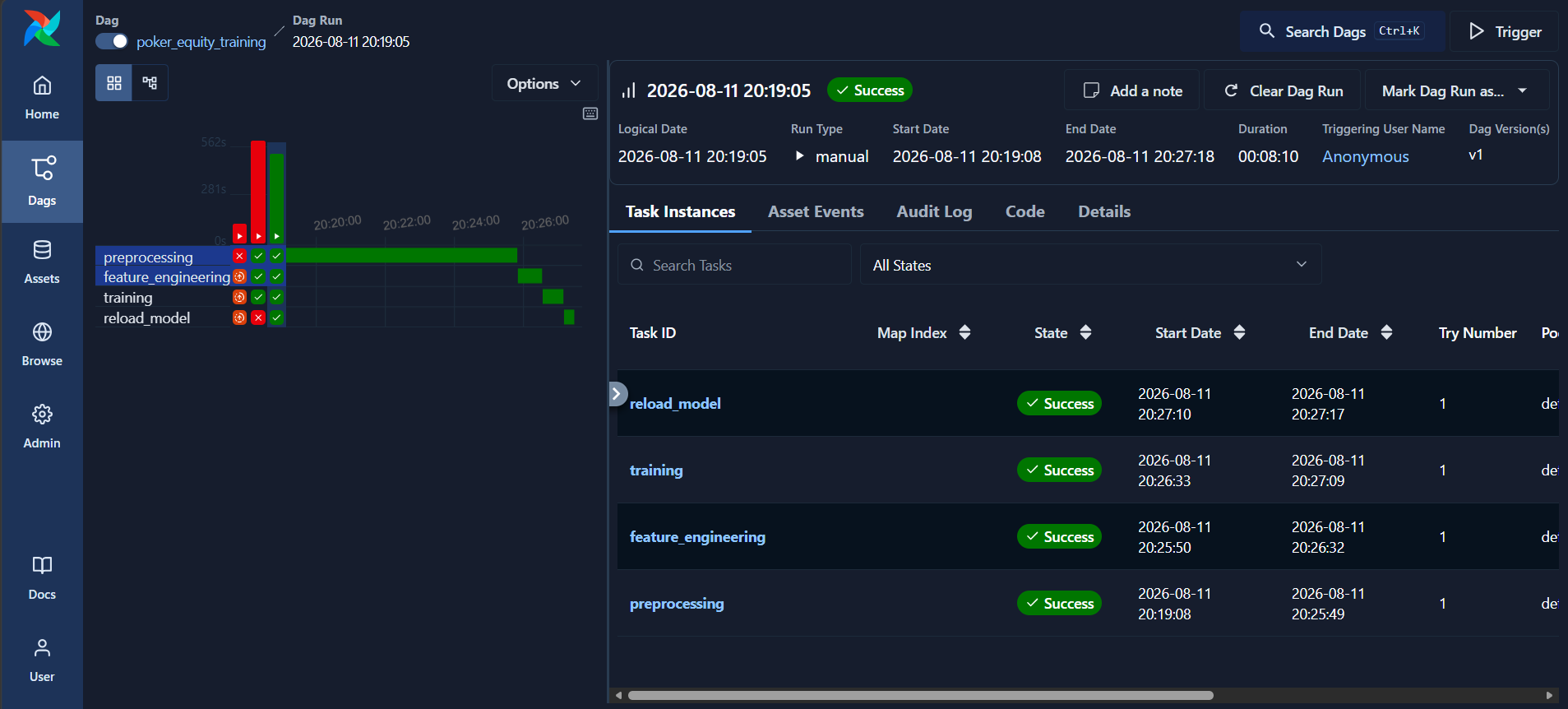
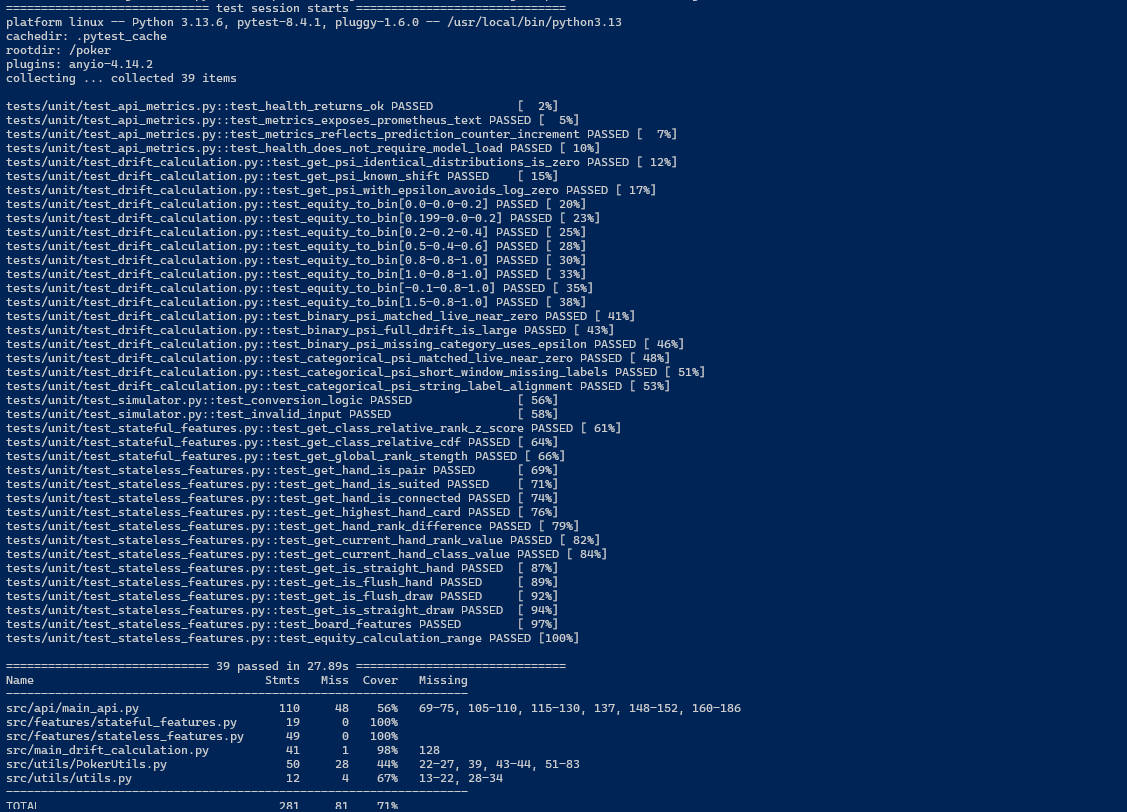
System screenshots (train → serve → observe)
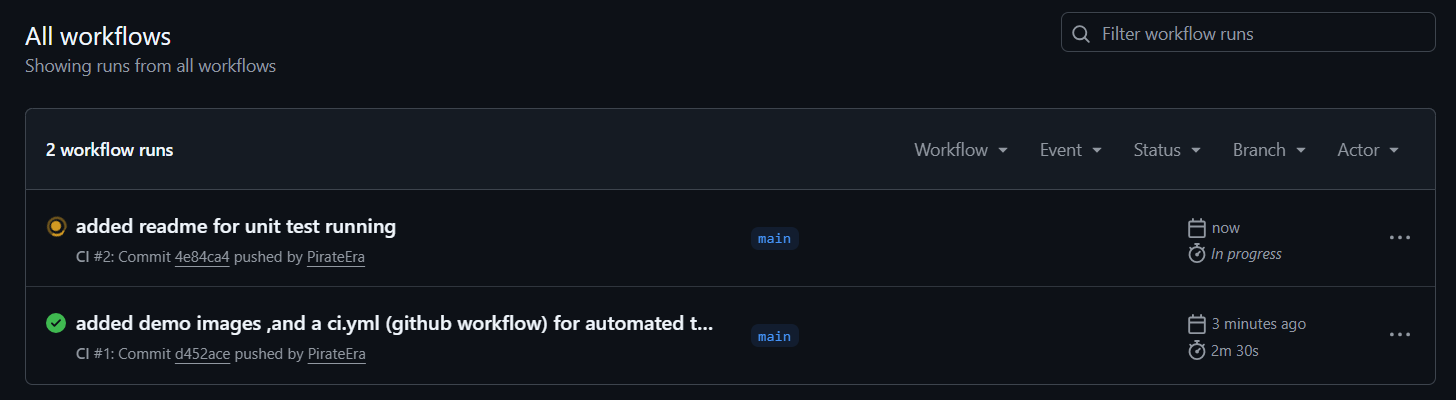
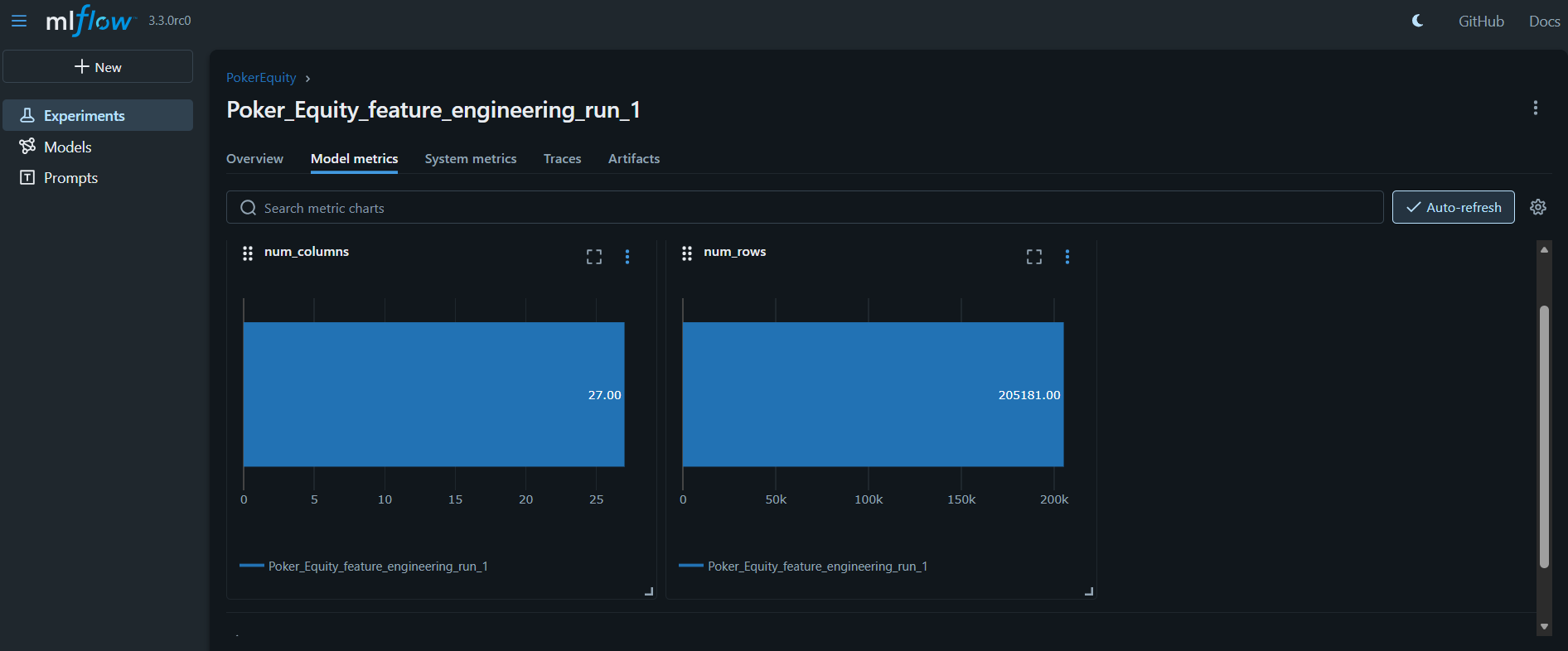
My Contributions
Skills this project shows
MLOps / production ML: end-to-end path from scheduled training to a live prediction API with monitoring.
Orchestration: Airflow DAGs for preprocess, feature engineering, training, and model reload.
Model registry: MLflow tracking for runs, metrics (MSE, R²), and model artifacts.
API serving: FastAPI service with health checks, prediction endpoint, and Prometheus metrics.
Observability: Prometheus, Pushgateway, Alertmanager, Grafana, plus PSI data-drift monitoring.
Containers & deployment: Docker Compose full stack, Dockerfile for the app, minimal Kubernetes for the API.
Data engineering: PySpark feature pipeline and MySQL as the batch data store.
Quality & CI: Pytest unit tests (features, drift, API metrics) and GitHub Actions (tests + Docker build).
Secrets hygiene: local
.envfor credentials. No passwords committed to the repo.
What I built
Packaged the full local stack in Docker Compose (API, MLflow, Airflow, MySQL, Prometheus, Alertmanager, Grafana, drift job).
Wrote Airflow training DAGs that run preprocessing, feature engineering, and training in Docker, then reload the API.
Served predictions with FastAPI, loading the latest MLflow model and exposing
/predict,/health, and/metrics.Added custom Prometheus metrics (prediction count, equity distribution, inference latency, errors) and a Grafana dashboard.
Implemented a PSI drift job that compares baseline vs live feature/prediction distributions and pushes gauges to Pushgateway.
Defined Prometheus alert rules (API errors, high drift, high inference latency) and wired Alertmanager.
Added a minimal Kubernetes Deployment + Service for the API, with docs for kind/minikube.
Set up GitHub Actions CI to run unit tests (Python 3.13 + JDK 17 for PySpark) and build the serving image on push/PR.
Scope note
This is not meant to showcase novel ML research. The model is a straightforward Random Forest equity regressor.
The value is the system around it: reproducible training, serving, monitoring, alerting, containers, and CI.